logo
Good price  online

products details

Created with Pixso. Home Created with Pixso. Products Created with Pixso.
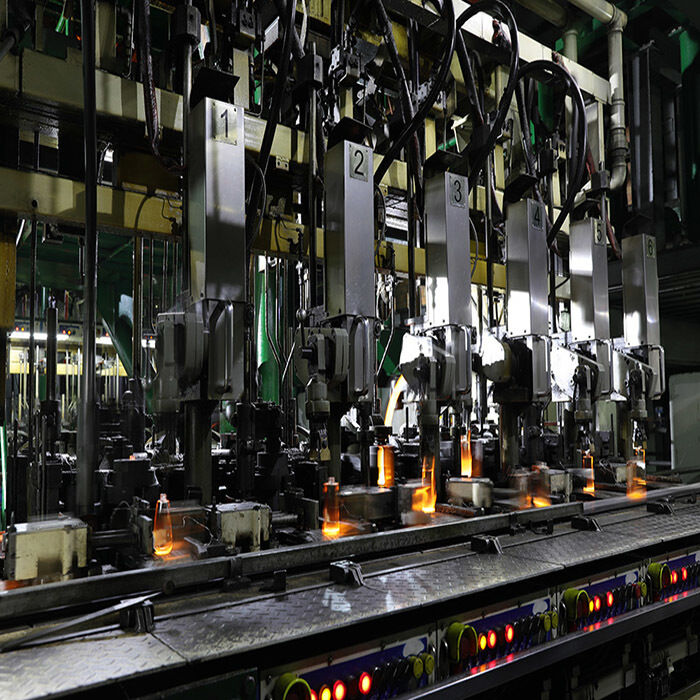
Glass Bottle Production Line
Created with Pixso. 100TPD Glass Bottle Manufacturing Line 380V Container Forming Equipment

100TPD Glass Bottle Manufacturing Line 380V Container Forming Equipment

Brand Name: JEFFER
Model Number: Customized
MOQ: 1 Set
Price: Negotiable
Delivery Time: 160 Days After Receiving The Down Payment
Payment Terms: T/T,L/C
Detail Information
Place of Origin:
China
Certification:
ISO9001,ISO14001,ISO45001
Product Name:
Cosmetic Bottle
Furnace Material:
Refractory Material, Mild Steel
Capacity:
100ml
Voltage:
380V
Color:
Clear
Weight:
Accordingly
Condition:
New
Application:
Cosmetics Industry
Warranty:
One Year
After-Sales Service:
Engineering Overseas Service Available
Packaging Details:
Wooden Case, Tray, Steel Frame, Etc
Supply Ability:
1 Set Per 4 Months
Product Description

1.Introduction

A glass bottle represents a solid, impermeable container crafted from vitreous materials, chiefly employed for storing fluid substances across beverage, medical products, and personal care sectors. Owing to its exceptional inertness against chemical interactions and remarkable adaptability in decorative finishing, glass packaging has earned widespread preference among manufacturers, carving out a resilient and expanding presence within the global packaging landscape.

The non-reactive characteristic of glass ensures that product authenticity remains uncompromised, shelf life receives meaningful extension, and the material lends itself to infinite recyclability without quality deterioration. These attributes collectively establish glass as a forward-looking packaging alternative for enterprises committed to environmental stewardship.


2.Manufacturing Process

The fabrication journey of glass bottles initiates with the procurement and metered blending of fundamental feedstocks, predominantly quartz sand, sodium carbonate, and limestone. Upon completion of batching, the production workflow advances through three pivotal phases:

  • Fusion: The raw batch is exposed to intense thermal energy inside a melting furnace, yielding a consistent, bubble-free liquid glass stream.
  • Configuration: The molten glass is converted into predetermined bottle geometries via precision-engineered molds or advanced automated forming machines.
  • Tempering: The freshly created containers traverse a regulated annealing tunnel, where gradual heat extraction eliminates residual strain and markedly reinforces the overall durability of each piece.

Blow and Blow Technique: This approach relies on pressurized air to first transform the glass droplet into an intermediate parison, securing accurate neck dimensions and uniform wall thickness. Subsequently, the parison shifts to a secondary molding station, where another blast of compressed air inflates it to the intended final silhouette.

Press and Blow Technique: A mechanical plunger initially compresses the glass gob to generate the parison, followed by pneumatic blowing to achieve ultimate configuration. Although originally developed for wide-mouthed vessels, the incorporation of vacuum-assisted functionality has expanded its viability for narrow-necked containers as well. This methodology delivers outstanding material dispersal and structural resilience, facilitating the production of lighter-weight bottles for everyday items like beer containers, thereby curbing energy consumption throughout the manufacturing cycle.


3.Types and Classifications

The diversity of glass bottles encompasses a broad spectrum of contours, volumetric capacities, and chromatic finishes, tailored to satisfy distinct functional demands and stylistic inclinations. From traditional cylindrical forms to bespoke geometric innovations, the assortment continues to expand in response to evolving market trends.

Squared and rectangular profiles, for example, enhance retail display efficiency while conveying a sleek, contemporary aesthetic. Environmentally minded consumers gravitate toward refillable glass bottles, which offer demonstrable reductions in single-use waste.

Luxury-oriented brands frequently opt for surface-decorated or tinted glass varieties, which effortlessly elevate perceived product value. Concurrently, ongoing ergonomic research has generated contoured bottle shapes that simplify gripping and pouring actions.

Whether destined for carbonated drinks, aromatic essential oils, or dermatological creams, an appropriate glass container exists to harmonize with product characteristics and reinforce corporate identity.

Classification by configuration:

 
Category Description
Body styles Standard containers, handled vessels, and tubular designs
Volume scope Spans from 1 milliliter to 25,000 milliliters
Base geometries Round (most common), elliptical, square, rectangular, and level-bottomed
Neck widths Wide-mouth variants exceeding 30mm inner diameter, suitable for pastes, powders, or chunky solids

Classification by functional attributes:

 
Category Description
Closure systems Screw caps, cork inserts, pouring spouts, crown seals, roll-on applicators, plastic lids, atomizing nozzles, push-button dispensers, lever-open tops, frosted glass stoppers, neck-integrated handles, and tubular outlets
Usage cycles Single-trip containers for immediate disposal versus returnable bottles engineered for repeated cleaning and refilling
Shaping processes Mold-based forming directly from molten glass versus tube-derived forming, where glass is initially drawn into cylindrical sections and later reworked into finished bottles
Glass hues Flint/clear for optimum product visibility; green for beverage applications; amber/brown for ultraviolet shielding in medical products and beers; opal for cosmetics, creams, ointments, and distilled spirits

FAQ

Q: Who we are?
A: JEFFER Engineering and Technology Co., Ltd is a professional engineering company specializing in project design, engineering technology consulting, engineering, procurement, construction (EPC), and project operation management.

Q: Can you customize the products?
A: Yes, we have an experienced professional team ready to make designs according to the requirements of customers.

Q: Do you offer installation on site overseas?
A: Yes, we can provide our engineer to supervise the installation work on site or provide the whole installation team on site to finish the project.

Q: Confidential protection provided?
A: Strict drawing management system eliminates the risk of leakage and protects your interests.