logo
Good price  online

products details

Created with Pixso. Home Created with Pixso. Products Created with Pixso.
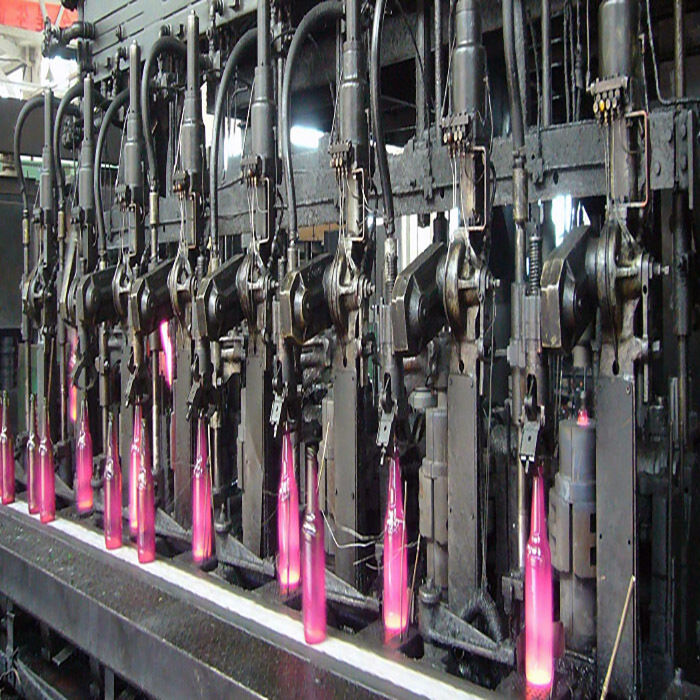
Glass Bottle Production Line
Created with Pixso. 40TPD Glass Bottle Production Line with 380V Forming Machine

40TPD Glass Bottle Production Line with 380V Forming Machine

Brand Name: JEFFER
Model Number: Customization
MOQ: 1 Set
Price: Negotiable
Delivery Time: 160 Days After Receiving the Down Payment
Payment Terms: T/T,L/C
Detail Information
Place of Origin:
China
Certification:
ISO9001, ISO14001, ISO45001
Product:
Beer Bottle
Capacity:
300ml
Bottle Type:
Round
Condition:
New
Color:
Amber, Green, Clear
Melting Temperature:
1400-1700℃
Automation Level:
Fully Automatic
Weight:
250g
Warranty:
One Year
After-Sales Service:
Engineering Overseas Service Available
Packaging Details:
Wooden Case, Tray, Steel Frame, Etc
Supply Ability:
1 Set Per 4 Months
Product Description

40TPD Glass Bottle Production Line with 380V Forming Machine 

1. Glass Bottle Overview

Glass bottles are rigid, chemically stable containers widely used for packaging beverages, food products, liquors, and personal care items. Their non-reactive nature preserves product purity, extends shelf life, and offers complete recyclability—positioning glass as a premium, eco-conscious packaging choice in today's market.

Beyond functionality, glass delivers exceptional visual appeal and design flexibility, making it a favored material across the food, beverage, cosmetic, and liquor industries. Its proven market presence continues to grow as brands prioritize sustainable, high-integrity packaging solutions.


2. Manufacturing Process – From Raw Materials to Finished Bottles

The production of glass bottles begins with a precise blend of natural raw materials, primarily silica sand, soda ash, and limestone. These ingredients are processed through a carefully controlled sequence:

  • Melting: Raw batch materials are fed into an end-fired furnace and heated to approximately 1500°C, yielding homogeneous molten glass ready for forming.

  • Forming: Two primary methods are employed depending on bottle type:

    • Blow-and-Blow Process: Compressed air first shapes the gob into a parison, establishing the neck finish. The parison is then transferred and blown into its final bottle shape—ideal for narrow-neck containers like beer and beverage bottles.

    • Press-and-Blow Process: A plunger initially forms the parison, followed by air blowing. Widely used for wide-mouth jars, this method—when combined with vacuum assist—now also accommodates narrow-neck applications. It delivers superior glass distribution and enables lightweighting for energy conservation, commonly applied to beer bottles.

  • Annealing: Newly formed bottles pass through a lehr where temperatures are gradually reduced, relieving internal stresses and enhancing mechanical strength.


3. Historical Origins of Glass Bottles

Dating back to ancient Mesopotamia around 1500 BCE, the glass bottle represents one of humanity's earliest packaging innovations. The Mesopotamians pioneered glassblowing techniques that enabled uniform, intricately designed containers—transforming liquid storage and transport.

Over millennia, glass bottle technology has continuously evolved, adapting to shifting consumer demands and industrial requirements. Today, it remains an indispensable packaging format, seamlessly blending ancient craftsmanship with modern manufacturing precision.


4. Container Glass Classification

Glass bottles are available in an extensive range of geometries, capacities, and colors, accommodating diverse product applications and brand identities.

Classification by Body Shape:

  • Standard containers / bottles

  • Handle-equipped containers

  • Tubular-style containers

  • Capacity range: 1ml to 25,000ml

Classification by Bottom Shape:

  • Round (most common)

  • Oval

  • Square

  • Rectangular

  • Flat-bottom

Classification by Neck Diameter:

  • Wide-mouth bottles/jars: inner diameter >30mm, typically used for semi-fluids, powders, or bulky solid goods, featuring minimal or no shoulder.

Classification by Closure Type:
Standardized neck finishes accommodate various closures, including screw caps, cork stoppers, pouring spouts, crown caps, roll-on pilfer-proof caps, plastic caps, spray pumps, press-type dispensers, prize-up caps, frosted glass stoppers, handle-integrated mouths, and tubular-type openings.

Classification by Usage Pattern:

  • Single-use bottles: Designed for one-time consumption and disposal.

  • Returnable/recyclable bottles: Engineered for repeated collection, cleaning, and reuse.

Classification by Forming Method:

  • Mold-formed: Molten glass shaped directly via metallic molds.

  • Tube-formed: Glass tubing stretched and subsequently remanufactured into finished bottles.

Classification by Color:


Color Typical Application
Flint / Clear Most common, maximizes product visibility
Green Beverages and beer
Brown / Amber Beer and premium liquors; absorbs UV rays to protect contents
Opal Cosmetics, creams, ointments, and liquors

5. Technical Specifications – Beer Bottle Production Line


Parameter Specification
Target Product Beer and beverage bottles (customizable capacity)
Daily Capacity 20–40 tons per day (TPD)
Production Line Investment USD 2.0–3.5 million
Power Supply 400–500kW, 380V
Furnace Type Natural gas-fired end-fired furnace with premium refractory lining
Forming Process Blow-and-Blow (for narrow-neck beer bottles)
Annealing Temperature-controlled lehr for stress relief
Customization Mold design available per client specifications


FAQ

Q: Who is JEFFER Engineering?
A: JEFFER Engineering and Technology Co., Ltd is a professional engineering firm specializing in project design, technical consulting, EPC contracting, and plant operation management for the glass industry.

Q: Can you customize the production line?
A: Yes. Our experienced team develops bespoke designs based on your specific product requirements, capacity targets, and site conditions.

Q: Do you offer on-site installation overseas?
A: Absolutely. We provide either supervisory engineers or complete installation crews to execute your project at your facility worldwide.

Q: How do you protect confidential information?
A: We enforce strict drawing management protocols to eliminate leakage risks and safeguard your intellectual property.