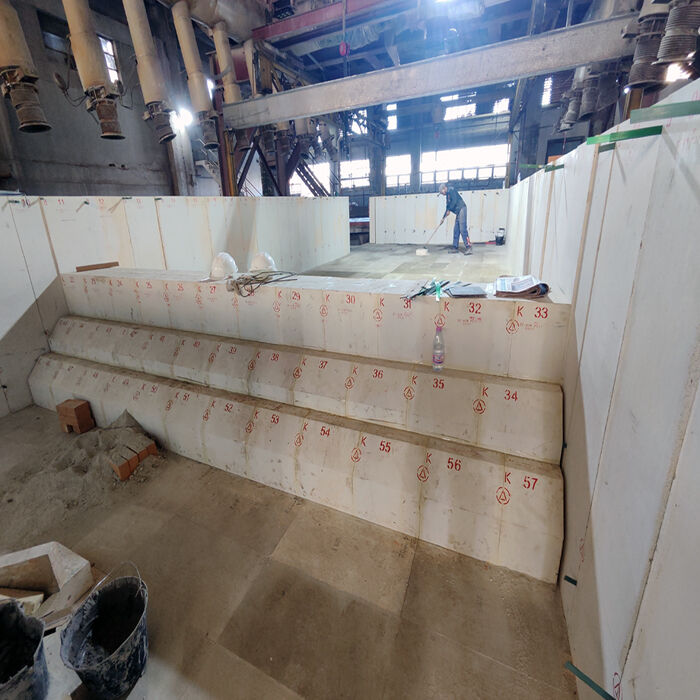
| Brand Name: | JEFFER |
| Model Number: | Customized |
| MOQ: | 1 Set |
| Price: | Negotiable |
| Delivery Time: | 90 Days After Receiving The Down Payment |
| Payment Terms: | T/T,L/C |
Industrial glass furnaces serve as the core thermal machinery in the glassmaking industry, tasked with transforming raw batch materials—such as quartz sand, soda ash, and limestone—into homogeneous molten glass. These systems operate under extreme conditions and are generally categorized as day-tank furnaces (continuous melters) or pot furnaces (batch-type). Their primary operational objectives include:
Batch Liquefaction: Achieving complete melting of raw feedstocks at temperatures ranging from 1400°C to 1600°C.
Fining & Degassing: Removing residual micro-bubbles and ensuring chemical consistency across the melt.
Thermal Conditioning: Adjusting the molten glass to the precise viscosity required for downstream forming processes (e.g., float, pressing, or blowing).
The transformation from cold batch to refined glass liquid involves four critical kinetic phases, each with distinct refractory wear mechanisms:
Stage 1: Silicate Sintering – During heating, solid-phase reactions occur between batch components. Gaseous by-products are released, resulting in an opaque, porous sinter composed mainly of silicates and unreacted silica.
Stage 2: Primary Melting – As temperatures rise, the sinter transitions into a fluid, translucent glass melt. However, this initial liquid remains chemically heterogeneous and saturated with numerous gas bubbles.
Stage 3: Fining (Clarification) – Continuous heating reduces melt viscosity, accelerating the ascent and release of dissolved gases. This stage aims to eliminate all visible bubbles from the molten bath.
Stage 4: Homogenization – Prolonged high-temperature holding allows molecular diffusion to smooth out compositional striae. Notably, this homogenization step can be effectively conducted at slightly lower temperatures than the fining phase.
3.1 Capacity-Based Tiers:
Small-Scale Units: Daily pull capacity below 50 tons.
Medium-Scale Units: Daily output ranging from 50 to 150 tons.
Large-Scale Industrial Lines: Exceeding 150 tons of glass per day.
3.2 Heating Energy Configurations:
Fossil-Fired Furnaces: Utilize natural gas, heavy fuel oil, or diesel as the primary combustion source.
All-Electric Melters: Rely entirely on electrical energy for Joule heating (ideal for high-quality, low-emission glass).
Hybrid (Oxy/Fuel-Electric) Systems: Primarily fired by combustion fuels, with electric boosting used to stabilize temperature profiles and increase pull rates.
A conventional fired glass furnace is systematically divided into four functional zones:
The Melting Basin & Superstructure: The lower tank holds the molten glass bath, while the upper crown space (flame space) channels high-temperature combustion gases. The burner ports deliver a mix of fuel and preheated combustion air to maximize thermal efficiency.
Combustion Air & Gas Supply System: Preheated air and gaseous fuel are directed into the pre-combustion chamber through specific ports, where they mix before ignition. This same port system also serves as the exhaust pathway for flue gases entering the regenerators.
Heat Recovery Section (Regenerators): (Implied structure) Responsible for capturing waste heat from exhaust gases to preheat incoming combustion air, significantly reducing specific energy consumption.
Exhaust & Draft Control: Manages the pressure balance and flue gas evacuation to maintain stable furnace atmosphere and melting conditions.
Maintaining a scientific melting protocol is essential for balancing productivity, glass quality, energy efficiency, and refractory longevity. Key control parameters include:
Thermal Profiling: Precise temperature zoning across the melting, fining, and conditioning areas.
Furnace Pressure Management: Maintaining slight positive pressure to prevent cold air ingress.
Bubbling System Control: Using submerged air/oxygen bubblers to enhance convective flow and accelerate fining.
Glass Level Regulation: Automatic batch feeding control to ensure constant level in the working end.
Fuel-Air Ratio Optimization: Real-time adjustment for complete combustion.
Reversing Valve Scheduling: Regular cycling of regenerator firing directions to prevent thermal imbalance and corrosion.
Q1: What is JEFFER Engineering’s core business?
A: JEFFER Engineering and Technology Co., Ltd is a full-service engineering provider specializing in project design, technical consulting, EPC (Engineering, Procurement, and Construction) turnkey solutions, and operational management for glass plants.
Q2: Do you offer custom refractory designs?
A: Absolutely. Our experienced in-house engineering team can develop customized refractory lining layouts and material grades tailored to your specific furnace geometry, melting temperature, and glass composition.
Q3: Can you support overseas installation?
A: Yes. We provide flexible on-site support options, including sending professional supervisors to guide your local crew or dispatching a complete installation team to execute the entire refractory erection project abroad.
Q4: How do you protect proprietary information?
A: We employ a strict, multi-level drawing and document management system to ensure complete confidentiality, safeguarding your technical interests throughout the project lifecycle.