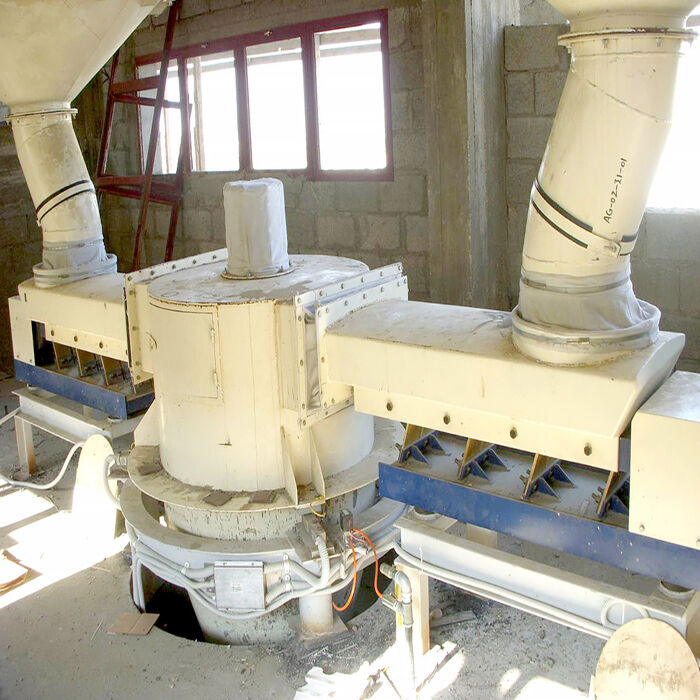
| Brand Name: | JEFFER |
| Model Number: | Customized |
| MOQ: | 1 Set |
| Price: | Negotiable |
| Delivery Time: | 120 Days After Received The Down Payment |
| Payment Terms: | L/C,T/T |
In any glass manufacturing process, the batching system determines the optical and mechanical properties of the final product. It is far more than simple material mixing – it is a precision process that transforms multiple raw materials with widely varying physical characteristics into a homogeneous batch with a uniformity index exceeding 99.8%.
JEFFER's batching solution, specifically engineered for 120 TPD furnaces, operates on a fully automated, unmanned principle, ensuring 24/7/365 delivery of batch that strictly adheres to the most demanding recipes. By leveraging 3D digital twin technology during the engineering phase, we eliminate spatial clashes and piping interferences upfront, reducing on-site installation time by approximately 20% – accelerating your time-to-commissioning and ROI.
Particle size distribution directly impacts melting efficiency and fining performance. Our system is designed with pre-treatment interfaces that allow seamless integration of crushing, screening, or drying modules when incoming materials fall outside the specified process window (e.g., 40–140 mesh for standard sand).
We classify all glass-making materials into two functional matrices:
Skeletal Materials (Major constituents): Silica sand, feldspar, dolomite, limestone, soda ash – forming the structural network of the glass.
Functional Additives (Minor constituents): Fining agents, decolourisers, colourants, oxidisers, fluxes, reductants – fine-tuning melting behaviour and final colour characteristics.
The complete system comprises eight interconnected modules, ensuring closed-loop control from material intake to batch discharge:
| Component | Function |
|---|---|
| Raw material silo bank | Equipped with continuous level sensors and bridging-breakers for consistent discharge |
| Feeding mechanisms | Variable-frequency screw or belt feeders, adaptable to materials of varying flowability |
| High-precision weighing platforms | Multi-load-cell redundant architecture; static accuracy better than ±0.1% |
| High-efficiency mixer | Forced-action turbine with water injection; coefficient of variation (CV) < 5% |
| Discharge & transfer conveyors | Wear-resistant belt conveyors and bucket elevators for horizontal/vertical transport |
| Pulse-jet baghouse filter | Maintains workshop dust concentration below 10 mg/Nm³, meeting Grade A environmental standards |
| Central electrical control panel | Based DCS platform with remote monitoring and diagnostic capabilities |
| Access platforms and walkways | OSHA-compliant safety railings for convenient daily inspection and maintenance |
We offer two well-established layout configurations to accommodate different plant constraints:
In-Line (Horizontal) Arrangement
Ideal for facilities with ample floor space. Silos are arranged in a single row, and weighed batch is conveyed via long-distance belt to the mixing bay. This layout offers excellent equipment visibility and generous maintenance access.
Tower-Type (Vertical) Arrangement
Designed for sites with limited land area or for capacity expansion projects. Silos, weighing hoppers, and the mixer are stacked vertically, allowing materials to flow entirely by gravity. This compact design reduces conveying energy consumption and enables rapid discharge through vertical drop – particularly suited for high-throughput operations with stringent cycle-time requirements.
Anti-Bridging Feed Devices: Each silo outlet is fitted with pneumatic vibrators and flexible gate valves, operating in conjunction with weighing instrumentation to deliver "fast–medium–slow" multi-stage feeding for optimal accuracy and speed.
Twin-Shaft Turbine Mixer: Hardfaced with special wear-resistant liners to withstand severe abrasion from silica sand. An automatic grease lubrication pump extends bearing life by over 30%.
Bucket Elevator: Features deep buckets with centrifugal discharge; head pulley lagged for increased friction, achieving a fill factor above 95% even in humid conditions – effectively eliminating back-spillage.
Belt Conveyor: EP200 multi-layer polyester fabric belt, equipped with automatic tracking devices and gravity take-up units to prevent misalignment and material spillage.
We believe that delivery is just the beginning of our partnership.
Pre-Shipment: Every system undergoes Factory Acceptance Testing (FAT) with simulated material loads, accompanied by comprehensive test documentation.
Installation & Commissioning: Experienced project managers are deployed on-site to provide end-to-end guidance – from foundation inspection through no-load and load trials.
Spare Parts & Service: For critical wear parts (load cells, mixer arms, filter bags), we maintain a central spare parts depot in China, ensuring emergency response within 48 hours.
Q: Can this system interface with our existing legacy DCS?
A: Yes. Our control platform supports mainstream industrial Ethernet protocols including OPC UA and Modbus TCP, enabling seamless data exchange with your upper-level ERP or older control systems.
Q: How do you handle sticky materials like soda ash that tend to cake inside silos?
A: Beyond stainless steel liners and anti-stick coatings, the system can optionally integrate wall vibrators combined with a hot-air drying system – fundamentally reducing moisture content and eliminating caking issues.