| Brand Name: | JEFFER |
| Model Number: | Customized |
| MOQ: | 1 Set |
| Price: | Negotiable |
| Delivery Time: | 90 Days After Received The Down Payment |
| Payment Terms: | T/T,L/C |
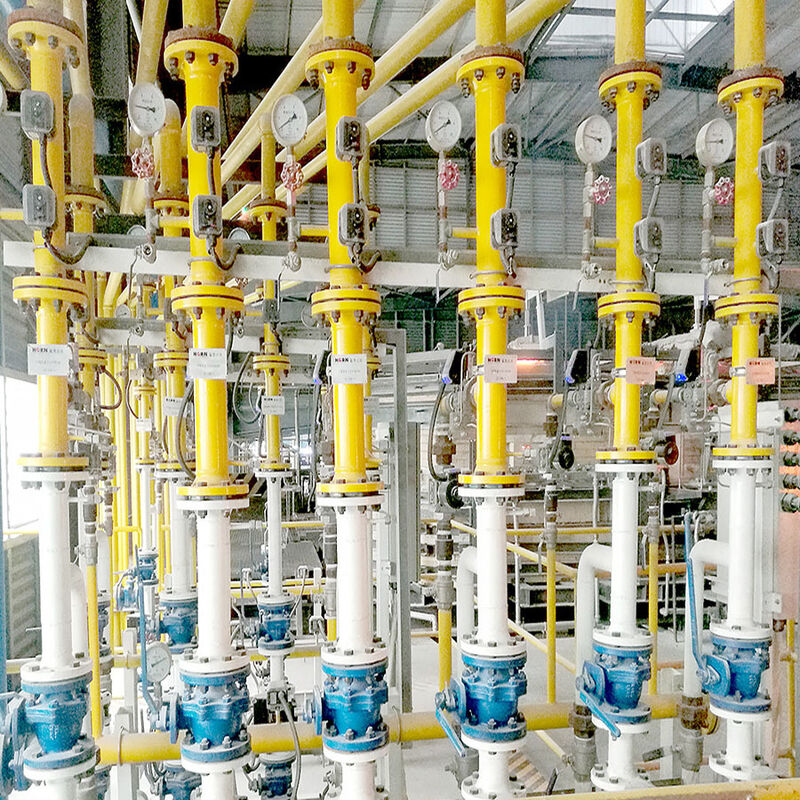
An end fired furnace combustion control system is a specialized industrial solution engineered specifically for end-fired glass melting furnaces. This system precisely manages the combustion process by regulating fuel flow, combustion air supply, flame characteristics, and thermal distribution across the furnace. The primary objectives are achieving stable melting conditions, maintaining consistent glass quality, and maximizing energy efficiency.
The chemical reaction is the oxidation between fuel and combustion air, occurring instantaneously upon ignition. However, the overall combustion performance and flame behavior are determined by the mixing dynamics, which are further influenced by furnace temperature profiles and process specifications.
Whether the system fires gas or oil, once fuel enters the combustion chamber, the combustion process follows three fundamental stages:
The end fired furnace combustion control system consists of the following integrated control modules:
| Module | Description |
|---|---|
| 1 | Fuel Supply Control Module – Precisely regulates fuel flow rate and pressure to maintain stable combustion conditions |
| 2 | Combustion Air Control Module – Manages air flow and preheating temperature through regenerator optimization |
| 3 | Firing End Temperature Control Module – Monitors and adjusts the temperature at the burner end to ensure proper melting conditions |
| 4 | Reversing Control Module – Controls the periodic reversal of firing and exhaust cycles to optimize heat recovery |
| 5 | Safety Interlock Module – Provides emergency shutdown and alarm functions to ensure operational safety |
The regenerator is a critical component in end fired furnace systems, widely adopted for preheating combustion air and delivering exceptional waste heat recovery efficiency. With this system, combustion air can be preheated to temperatures between 1200°C and 1350°C, significantly reducing fuel consumption and improving thermal efficiency.
The furnace combustion air system comprises the following key components:
| Item | Component | Function |
|---|---|---|
| 1 | Regenerator | Recovers waste heat to preheat incoming combustion air |
| 2 | Manual valve | Provides manual isolation and flow adjustment |
| 3 | Combustion air blower / fan | Supplies forced air to the regenerator and furnace |
The double deck reversing unit is a critical mechanism for the periodic reversal operation in end fired furnaces. It enables alternating firing and exhaust cycles across the twin regenerators, ensuring continuous preheating of combustion air and efficient heat recovery.
The double deck reversing unit consists of:
The reversing cycle is typically controlled by PLC logic, with adjustable reversal intervals based on furnace operating conditions and temperature requirements.
The control system employs a closed-loop control strategy to maintain optimal combustion conditions:
Q: What is JEFFER Engineering and Technology Co., Ltd.?
A: JEFFER Engineering and Technology Co., Ltd. is a professional engineering enterprise specializing in project design, engineering technology consulting, EPC (Engineering, Procurement, and Construction), and comprehensive project operation management services.
Q: Does JEFFER offer customized combustion control system designs?
A: Yes, we provide complete end fired furnace combustion control solutions, including control logic design, equipment selection, system integration, and full-system drawings tailored to your specific production requirements and site conditions.
Q: What automation platforms do you support for the control system?
A: We support major automation platforms including PLC and DCS systems, with customizable control algorithms and HMI interfaces as per client preferences.